
Coach's Corner Blog
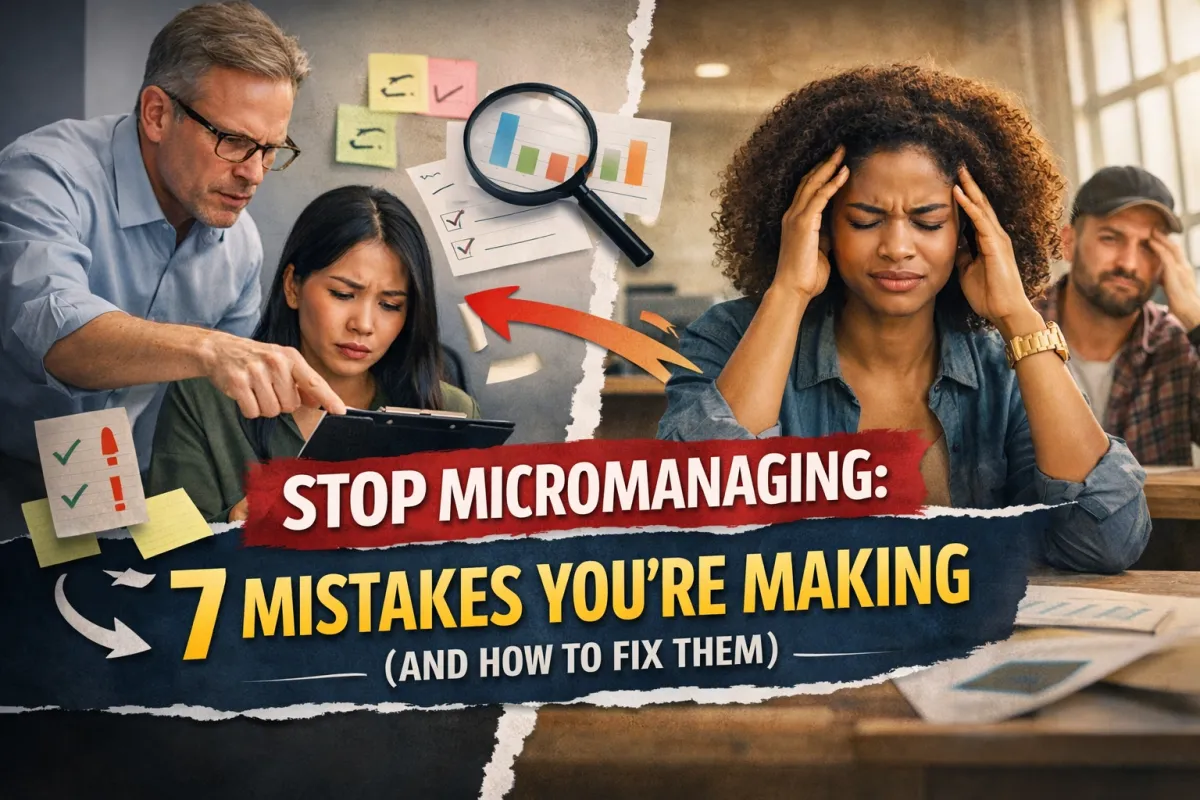
Stop Micromanaging: 7 Mistakes You're Making (And How to Fix Them)
Let's be honest: you're probably driving your team crazy right now.
You don't mean to. You just want things done right. You've built this business, you know what works, and when you see something going sideways, your instinct is to jump in and fix it.
But here's the problem, that instinct is killing your growth.
Micromanaging doesn't just frustrate your team. It bottlenecks your business, burns you out, and prevents your people from stepping up. Worse? It signals to everyone around you that you don't trust them. And trust is the foundation of executive presence and real leadership.
The good news? You can fix this. Today. Right now.
Here are the 7 biggest micromanagement mistakes leaders make, and exactly how to stop making them.
Mistake #1: You're Withholding Context (And Creating Confusion)
You tell your team what to do, but you skip the why.
"Just get this done by Friday." "Handle that client." "Fix the inventory issue."
Your team isn't stupid, they're in the dark. Without context, they're guessing at your priorities, second-guessing their decisions, and wasting time trying to read your mind.
✅ The Fix:
Share the "why" behind every decision. When you assign a task, explain how it fits into the bigger picture. What's the goal? Why does it matter? What happens if it's done poorly?
This isn't hand-holding, it's leadership coaching in action. You're building your team's ability to think strategically, not just execute blindly.
💡 Golden Nugget: When employees understand the reasoning, they make better decisions without you. That's how you build a business that runs without you micromanaging every move.
Mistake #2: You Take Control Inconsistently (And Confuse Everyone)
One day you tell your manager to "handle it." The next day, you step in and override their decision.
Your team never knows when they actually have authority. So they stop taking initiative. They wait for you. They become dependent.
✅ The Fix:
Define decision-making authority clearly. Sit down with your team and map out what decisions they own vs. what requires your input. Put it in writing.
Then, and this is the hard part, stick to it. If you said they own it, let them own it. Even if they do it differently than you would.
This is where emotional intelligence kicks in. You have to manage your own control impulses and trust the people you hired.

Mistake #3: You Don't Recognize Good Work (And Wonder Why Morale Sucks)
When was the last time you publicly acknowledged someone on your team for doing great work?
If you can't remember, that's the problem.
Micromanagers are great at pointing out mistakes. They're terrible at celebrating wins. Your team doesn't feel valued, they feel scrutinized.
✅ The Fix:
Create formal recognition systems. Weekly shoutouts in team meetings. A Slack channel for wins. An employee-of-the-month award. Something.
Recognition isn't soft, it's strategic. It tells your team what behavior you want more of. And it builds the kind of culture where people want to step up, not just avoid getting yelled at.
🎯 Pro Tip: Praise in public. Correct in private. That's executive presence 101.
Mistake #4: You're the Bottleneck for Every Decision
Every approval flows through you. Every decision waits on your desk. You've become the limiting factor in your own business.
If you're working 60+ hours a week and still can't get ahead, this is why.
✅ The Fix:
Delegate authority, not just tasks. Give your team the power to make decisions and hold them accountable for results.
Start small. Pick one category of decisions you currently control and hand it off completely. Client approvals under $5K? Your operations manager owns it. Vendor selection for supplies? Your team lead decides.
You're not losing control, you're multiplying your impact. That's the shift from micromanager to multiplier. That's leadership coaching in real time.
📈 Reality Check: The businesses that scale are the ones where the owner isn't required for day-to-day decisions. Period.
Mistake #5: You Don't Actually Listen to Your Team
Steve Jobs said it best: "It doesn't make sense to hire smart people and tell them what to do; we hire smart people so they can tell us what to do."
But you're not doing that. You ask for input, then do what you were going to do anyway. Or worse, you don't ask at all.
Your team has stopped sharing ideas because they know you won't listen.
✅ The Fix:
Ask questions. Gather information. Make decisions together.
In your next leadership meeting, try this: "What do you think we should do here?" Then shut up and listen. Don't interrupt. Don't correct. Just listen.
You might be surprised by what your team knows that you don't. And when people feel heard, they take ownership. That's how you stop micromanaging and start leading.

Mistake #6: You Focus on Criticism Instead of Development
You're quick to point out what's wrong. Slow to develop what's right.
Your team feels like they're walking on eggshells, waiting for the next critique.
Here's the truth: You can't criticize people into greatness. You can only develop them there.
✅ The Fix:
Separate positive and negative feedback. Don't sandwich them together. Give recognition when it's earned. Address problems when they happen.
When you do correct someone, stick to facts, not feelings. Not "This is sloppy." Instead: "This report needs three more data points to support the conclusion. Here's what to include."
That's coaching. That's how you build emotional intelligence in your team, and in yourself.
💰 Business Impact: Leaders who develop people build teams that grow revenue. Micromanagers who criticize people build teams that quit.
Mistake #7: You've Built a Culture Without Trust
This is the root of all micromanagement: you don't trust your team.
Maybe they've let you down before. Maybe you've been burned by bad hires. Maybe you just think "it's easier to do it myself."
But a business without trust is a business that can't scale. Your people won't take ownership. They won't innovate. They'll just do the bare minimum and wait for you to tell them what to do next.
✅ The Fix:
Build trust intentionally. Start by trusting first, even if it feels risky.
Give someone a project and step back. Let them figure it out. If they stumble, coach them through it. If they succeed, recognize it publicly.
When you demonstrate trust, your team rises to meet it. When you withhold it, they shrink.
🔥 Real Talk: If you can't trust your team to run the business without you, you either hired the wrong people or you've trained them to be dependent. Either way, that's on you to fix.
From Micromanager to Multiplier: The Transformation
Stopping micromanagement isn't about letting go of standards. It's about raising your standards for leadership.
Great leaders don't control every move, they build systems, develop people, and create cultures where excellence is the default. That's how you go from working in your business to leading from your business.
This is what leadership coaching is all about: transforming your habits, sharpening your emotional intelligence, and building the executive presence that makes people want to follow you, not because they have to, but because they believe in where you're going.
Take the First Step
If you read this and thought, "Damn, that's me," you're not alone. Most business owners micromanage because they care: they just haven't learned a better way.
But now you know. And knowing is only valuable if you act on it.
Pick one mistake from this list. Just one. Commit to fixing it this week. Share the why with your team. Delegate one category of decisions. Recognize someone publicly.
Then watch what happens.
🎯 Ready to stop micromanaging and start leading? Let's talk. Schedule a strategy session and we'll build the systems and leadership habits that let you step back without everything falling apart.
Your business doesn't need you to do everything. It needs you to lead. There's a difference.
Let's fix that.